
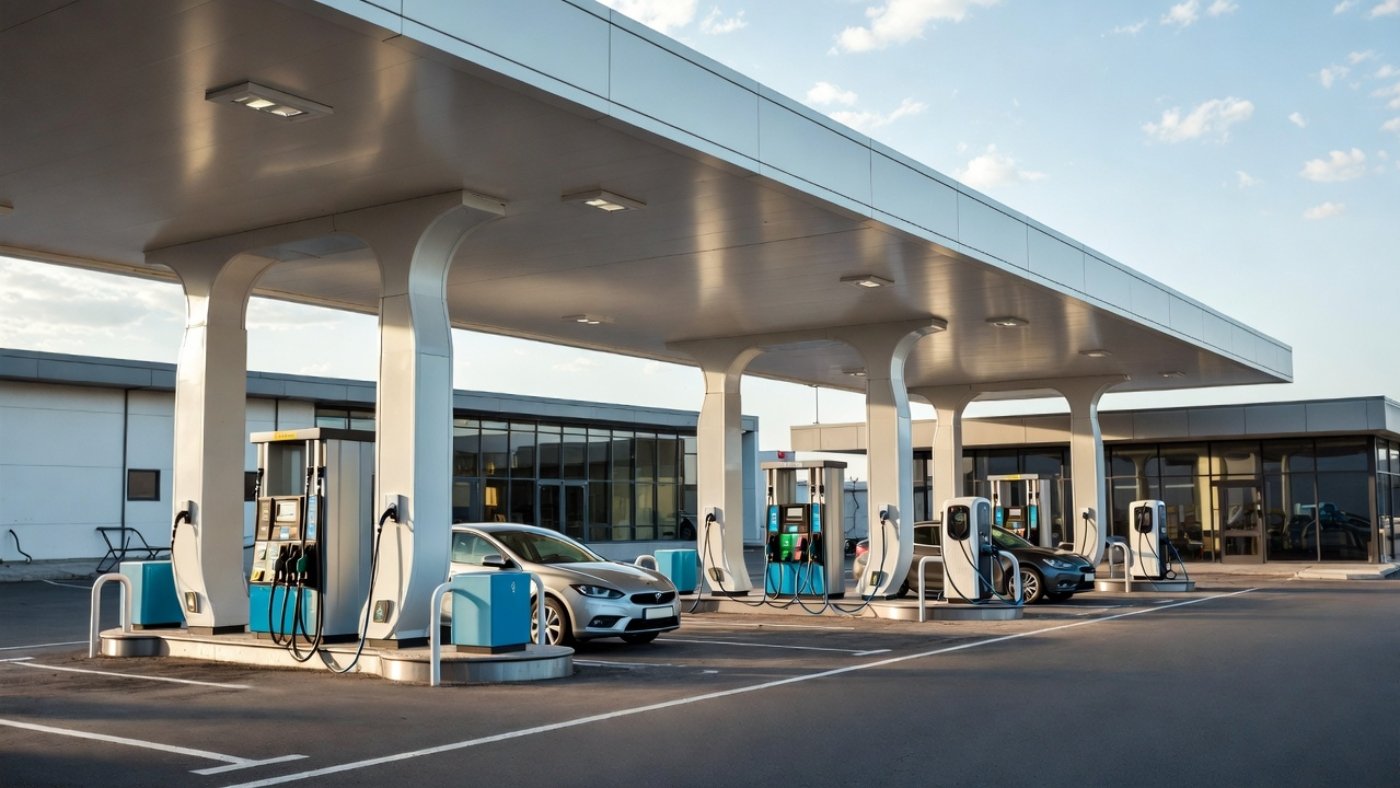
The emergence of a world with infinite energy technologies represents one of the most transformative visions for humanity’s future. While true “infinite” energy—meaning unlimited, cost-free, and violation-free extraction from nothing—remains elusive under known physics laws like conservation of energy, rapid progress in clean, abundant, and near-limitless energy sources is reshaping our energy landscape. As of 2026, we’re witnessing an accelerating shift toward technologies that could provide effectively boundless clean power, ending scarcity, slashing emissions, and powering exponential growth in AI, industry, and global development.
This article explores the current state, key breakthroughs, realistic pathways, and implications of moving toward an era of abundant energy.
The Current Reality: From Scarcity to Abundance
For centuries, energy has been finite and contested—fossil fuels dominate, renewables scale unevenly, and geopolitical tensions arise over resources. Yet 2025 marked a pivotal year: renewables surpassed coal globally as an electricity source, with solar and wind covering the entire increase in global electricity demand in the first half of the year (Ember data). Investments hit records, like $378 billion in U.S. energy transition sectors, driven by solar, storage, and corporate deals for zero-carbon power.
This isn’t “infinite” yet, but it’s trending toward abundance. Technologies like advanced solar (e.g., perovskite tandems hitting 34-35% efficiency), massive battery storage, next-gen geothermal, and offshore wind are scaling fast, making energy cheaper and more available.
Fusion Energy: The Closest to “Infinite” Clean Power
Nuclear fusion—the process powering the Sun—promises virtually unlimited fuel from seawater-derived deuterium and tritium, with no long-lived waste and minimal environmental impact.
Key 2025-2026 milestones include:
- Private investment surpassing $10 billion, with dozens of companies racing toward demos.
- Records in plasma duration and energy output at facilities like China’s EAST (surpassing plasma density limits), France’s WEST, and Germany’s Wendelstein 7-X (1.8 gigajoules turnover).
- U.S. National Ignition Facility (NIF) achieving repeated ignition with increasing yields (up to 8.6 MJ output from ~2 MJ input).
- Startups like Helion hitting extreme temperatures and planning grid delivery by 2028 (e.g., to Microsoft), while Commonwealth Fusion Systems targets SPARC operations.
- ITER’s central solenoid completion, advancing the international mega-project.
The IEA’s 2026 State of Energy Innovation report highlights fusion alongside renewables, noting a “race” with milestones like the first fusion plant demonstrating saleable energy by 2030. Governments and tech giants (Google, Microsoft, Bill Gates) are betting big, viewing fusion as baseload power for AI-driven demand.
If scaled, fusion could deliver energy so abundant it’s effectively “free” at marginal cost—transforming desalination, hydrogen production, and carbon capture.
Advanced Renewables and Storage: Practical Steps to Near-Infinite Supply
While fusion matures (likely 2030s+ for widespread deployment), renewables + storage provide the bridge:
- Perovskite-silicon tandems → commercializing at 34.6%+ efficiency, far beyond traditional panels.
- Floating offshore wind and enhanced geothermal unlocking vast resources.
- Record storage additions (15 GW in the U.S. in 2025) balancing intermittency.
- AI-optimized grids and batteries addressing data center power surges.
These create a system where energy feels limitless in practice—cheap, clean, and scalable.
The “Infinite” Fringe: Zero-Point Energy and Beyond
Concepts like zero-point energy (ZPE)—the quantum vacuum’s baseline fluctuations—are real in physics (e.g., Casimir effect). However, mainstream science views extracting usable power from ZPE as prohibited by thermodynamics; no verified over-unity devices exist, and claims often fall into pseudoscience.
Historical works like Infinite Energy Technologies (discussing Tesla, cold fusion, Searl Effect) inspire speculation, but practical breakthroughs remain in fusion and renewables, not exotic “free energy” machines.
Implications: A World Transformed
An abundant energy era could:
- Eliminate energy poverty and enable universal access.
- Accelerate decarbonization and reverse climate damage.
- Power AI, vertical farming, space exploration, and desalination at scale.
- Shift geopolitics from resource wars to innovation races.
- Raise questions about consumption—abundance might amplify environmental pressures if unchecked.
Yet challenges remain: grid upgrades, material needs (e.g., rare earths), permitting delays, and equitable distribution.
Conclusion: Toward True Energy Freedom
We’re not yet in a world of infinite energy, but 2025-2026 breakthroughs signal the tipping point. Renewables dominate growth, fusion accelerates toward reality, and innovation surges. This transition isn’t just technological—it’s societal, demanding collaboration to ensure benefits are shared.
Humanity stands at the threshold of energy abundance. The question isn’t if we’ll get there, but how quickly and wisely we seize it.