
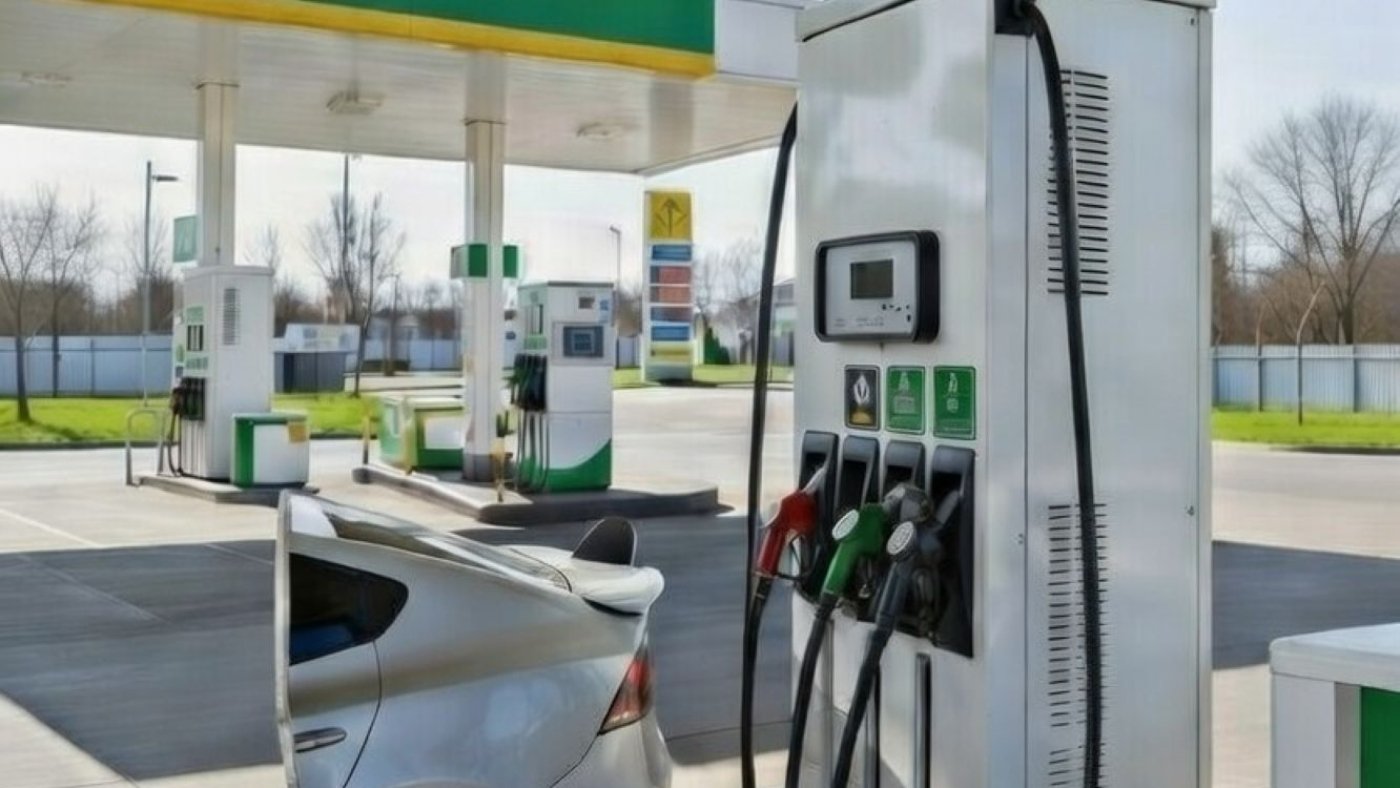
For over a century, the internal combustion engine (ICE) and fossil fuels have been the twin pillars of global industrial stability. However, we are currently witnessing a historic pivot. As battery technology reaches a “critical mass” in performance, the transition from a fuel-based economy to a battery-powered one is no longer just a trend—it is a structural overhaul of global trade.
While the environmental case for batteries is well-established, the economic path forward is fraught with systemic risks.
- The Geopolitical Pivot: Trading One Monopoly for Another
Moving to batteries does not necessarily grant energy independence; it often simply shifts the dependency. While oil is geographically distributed across dozens of nations, the “Big Three” battery minerals—Lithium, Cobalt, and Graphite—are highly concentrated.
As of 2026, a single nation, China, controls over 70% of global lithium-ion refining capacity. We face the very real risk of a “Green Squeeze,” where mineral-rich nations form cartels similar to OPEC, potentially creating supply shocks that could paralyze manufacturing sectors far more effectively than the oil crises of the 1970s.
- The Domino Effect: Cars, Homes, and Industrial Machinery
The automotive industry is the “proving ground” for this revolution. If a battery can be made dense enough to propel a two-ton vehicle for 500 miles at high speeds, that technology will inevitably migrate to every other sector of the economy.
- Residential Autonomy: Once high-capacity batteries become affordable for cars, they become standard for homes. We are seeing a shift toward Vehicle-to-Home (V2H) and Vehicle-to-Grid (V2G) technologies. This allows consumers to bypass the traditional utility grid, potentially leading to a “utility death spiral” where centralized power companies lose their primary revenue base.
- Heavy Machinery: Sectors once thought “un-electrifiable”—such as excavators, long-haul trucking, and cargo ships—are now switching to batteries. This removes the need for onsite fuel storage and the vast mid-stream distribution networks (tankers, pipes, and specialized trucks) that currently serve the construction and shipping industries.
- The “Stranded Asset” Crisis
The global economy sits atop trillions of dollars of “sunk costs” in ICE infrastructure.
- Devaluation: Refineries, gas pipelines, and service stations represent massive capital investments that are at risk of becoming stranded assets—infrastructure that becomes obsolete before it can pay for itself.
- Fiscal Burden: Governments are now faced with the “Double-Infrastructure Trap”: the need to fund a massive new EV charging grid while simultaneously maintaining a decaying fossil-fuel grid for the shrinking percentage of ICE users.
- Labor Market Dislocation
The shift from fuel to batteries is also a shift in mechanical complexity.
- The Component Gap: An internal combustion engine has roughly 2,000 moving parts, whereas an electric motor has about 20.
- Manufacturing Jobs: This simplicity is a win for the consumer but a direct threat to millions of workers in the automotive supply chain. While the IEA predicts millions of “green jobs” will be created, they are often in different geographical regions and require entirely different skill sets (e.g., chemical engineering vs. precision machining), leading to significant structural unemployment in traditional “rust belt” regions.
- Supply Chain Fragility and “Price Whiplash”
Fuel markets are volatile, but they are mature and have deep liquidity. The battery supply chain, by contrast, is in its “wild west” phase.
- The 50,000-Mile Journey: A typical battery’s components can travel over 50,000 miles from extraction to final assembly. Any geopolitical tension in a shipping lane or a mining district (such as the Democratic Republic of Congo for cobalt) can cause 100% price spikes in a matter of weeks.
- Recycling Deficit: We are currently producing batteries faster than we can recycle them. Without a massive, economically viable circular economy to reclaim lithium and nickel, the world faces a “waste cliff” by the mid-2030s that could drag down national GDPs.
Conclusion: The S-Curve of Adoption
History shows that technological displacement doesn’t happen linearly; it happens exponentially on an S-Curve. By the time batteries can reliably power a car for long ranges, the economic infrastructure for fuel-powered homes and machinery will begin to collapse. The “Great Energy Transition” is an economic necessity for long-term survival, but in the short term, it is one of the most significant financial risks of our century.
Add a Comment