
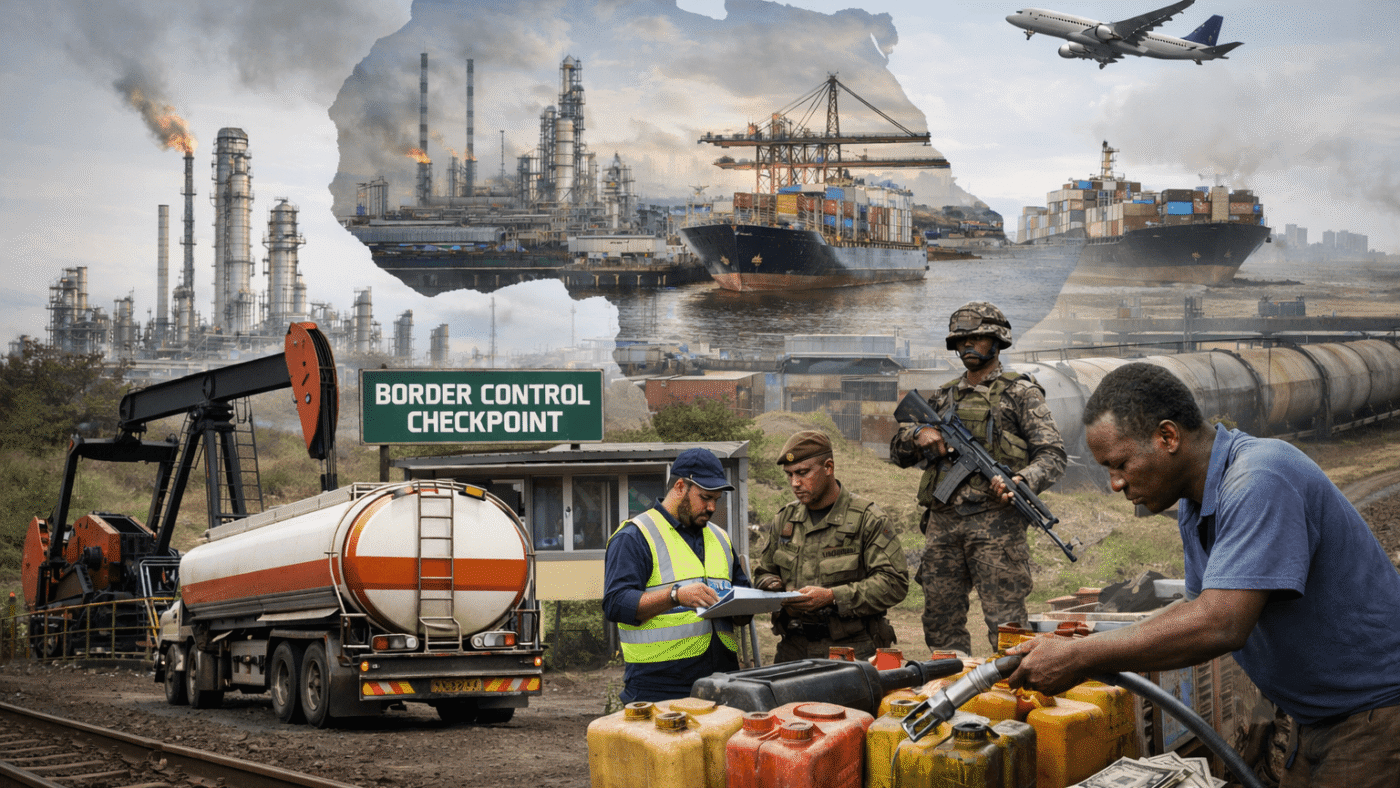
Petroleum products — including motor gasoline, diesel, kerosene, and liquefied petroleum gas (LPG) — are central to economic activity in Africa. They power transportation networks, support industrial activity, and influence inflation and public welfare. Yet, despite abundant crude oil resources on the continent, Africa remains a net importer of refined petroleum products, and trading these commodities across regional borders presents persistent challenges. These challenges hinder cost-effective access, compromise energy security, and constrain broader economic development.
This article examines the key barriers to petroleum products trading across Africa, exploring infrastructural, regulatory, economic, and geopolitical dimensions.
1. Inadequate and Fragmented Infrastructure
Refining Capacity Deficits
Most African countries lack sufficient domestic refining capacity. Of over 30 refineries across the continent, only a handful operate at optimal capacity, and many are non-functional due to underinvestment or technical issues. Consequently, nations that produce crude oil still depend on imports of refined products — often imported from Europe, the Middle East, and Asia — increasing their exposure to global price volatility.
Limited Storage and Distribution Networks
A second challenge is the lack of strategic storage terminals and distribution infrastructure. Many landlocked countries in Africa struggle with insufficient depot capacity, which raises the cost of holding inventory and increases the risk of supply shortfalls.
Cross-Border Transport Hurdles
Road and rail networks linking producer and consumer states are often in poor condition or underdeveloped. Fragile transport corridors raise logistics costs and increase transit times. In some regions, the absence of efficient pipeline networks — a cost-effective way to move products — further constrains trade.
2. Regulatory and Institutional Barriers
Border Delays and Non-Tariff Barriers
Cross-border trading in Africa is slowed by inefficient customs procedures, inconsistent documentation requirements, and multiple checkpoints. Non-tariff barriers — such as arbitrary fees and ad hoc inspections — increase costs and discourage regional trade.
Divergent Standards and Quality Regimes
Regulatory frameworks governing product specifications, quality standards, and licensing differ markedly between African countries. A truck carrying diesel from one country may face rejection at a neighbouring border for failing to meet another country’s technical specifications.
Weak Institutional Coordination
Many countries lack integrated national petroleum regulatory bodies capable of harmonizing policies, overseeing pricing frameworks, ensuring quality control, and facilitating cross-border cooperation.
3. Policy and Price Distortions
Fuel Subsidies
Numerous African states provide fuel price subsidies as a means of easing the cost burden on consumers. While intended to protect vulnerable populations, subsidy systems often result in:
-
Market distortions that discourage efficient distribution;
-
Smuggling and diversion of subsidized products to neighbouring countries with higher pump prices; and
-
Fiscal strain on governments, undermining investment in infrastructure.
These dynamics hinder the establishment of competitive regional petroleum markets.
Foreign Exchange Constraints
Many African currencies are volatile or constrained by limited foreign reserves. Since international petroleum products are priced in US dollars, importers — including trading firms — often struggle to secure foreign exchange at competitive rates. Delays in remitting FX or restrictive controls deter traders and raise the risk premium on imports.
4. Security and Governance Risks
Conflict and Instability
Regions marked by insurgency, inter-communal conflict, or political instability face elevated risks for the safe transport of petroleum products. Armed groups may target fuel depots or intercept tankers, driving up insurance and security costs.
Corruption and Leakages
Weak governance in some jurisdictions leads to corruption, diversion of product allocations, and opaque tendering processes. Unclear ownership or control of distribution networks creates uncertainty for legitimate traders and discourages investment.
5. Regional Integration and Policy Misalignment
Slow Implementation of Continental Trade Frameworks
The African Continental Free Trade Area (AfCFTA) presents opportunities to streamline trade in energy products. However, implementation has been slow, and key provisions relating to customs cooperation, regulatory harmonization, and cross-border infrastructure investment are still nascent.
Competing Bilateral Agreements
Some countries prioritize bilateral petroleum trade agreements over multilateral frameworks, undermining collaborative investment in regional pipelines, storage hubs, and joint refineries.
6. Market Structure and Competition
Dominance of Multinational Traders
Global oil traders — often large multinational corporations — dominate the supply chains for refined products in Africa. Smaller local traders face barriers to entry due to high capital requirements, limited access to credit, and lack of hedging mechanisms against price volatility.
Limited Access to Capital
Fuel trading is capital-intensive. The absence of long-term financing instruments and risk management tools (e.g., futures contracts) means local traders often operate on thin margins or face high interest rates, constraining their competitiveness.
7. Environmental and Social Considerations
Regulatory Shift Towards Cleaner Fuels
Emerging environmental regulations — such as mandates for ultra-low sulphur fuel — require investment in refining upgrades and quality testing. In countries with limited technical capacity, compliance costs can be prohibitive.
Informal Distribution Networks
Informal markets — including backyard fuel vendors — flourish where formal distribution is weak. While serving underserved communities, they pose environmental hazards and undermine formal traders who must adhere to safety and quality standards.
Pathways Forward: Enhancing Petroleum Products Trade
Addressing the challenges outlined requires concerted action across multiple fronts:
-
Regional Infrastructure Planning: Investment in cross-border pipelines, storage hubs, and revitalization of dysfunctional refineries.
-
Harmonized Standards: Adoption of common product specifications and quality assurance frameworks to reduce rejection and border delays.
-
Customs Modernization: Deployment of electronic documentation systems and simplified procedures to facilitate trade.
-
Subsidy Reforms: Transition towards targeted social safety nets instead of broad fuel subsidies — reducing smuggling and fiscal pressures.
-
Institutional Strengthening: Empowerment of petroleum regulatory authorities with clear mandates and cross-border cooperation mechanisms.
-
Access to Finance: Development of innovative financing models for local traders and enterprises in the fuel supply chain.
Conclusion
Petroleum products trading across Africa stands at the intersection of infrastructure deficits, fragmented policy regimes, market distortions, and geopolitical risk. While the continent’s energy resources hold enormous promise, unlocking this potential requires deep structural reforms, strategic investment, and stronger regional cooperation. Achieving an integrated and efficient petroleum products market would not only enhance energy security but also catalyze economic growth and industrialization across Africa.
Add a Comment